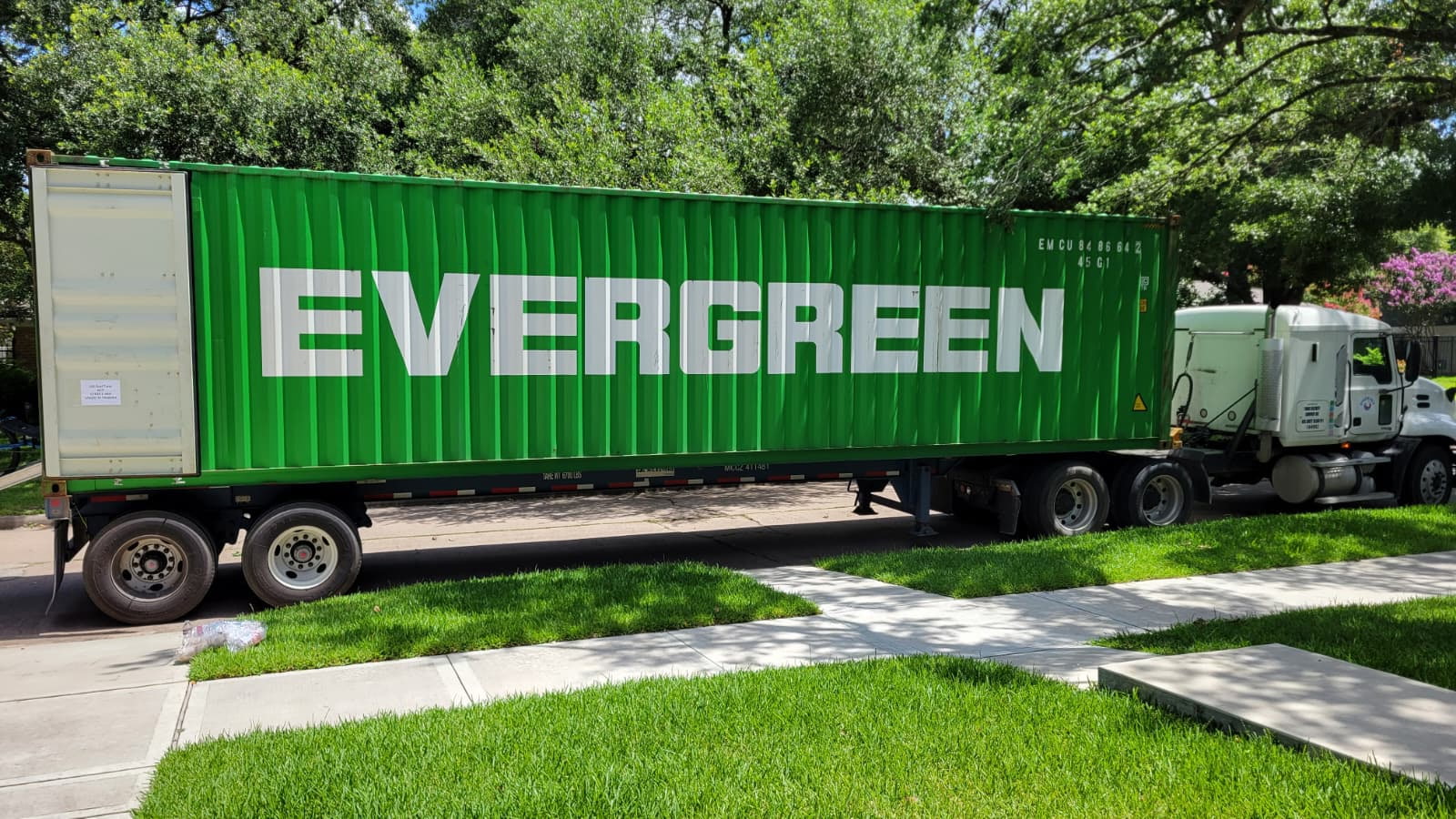
Container shipping for international household moves
20ft and 40ft steel containers moving household goods from UK ports to the rest of the world — sealed at origin, tracked through transit, cleared at destination.
Container Shipping
Reviewed by Dimond Movers international ops
Container shipping is the backbone of every long-haul international move. A steel intermodal container — usually 20ft (about 33 m³ usable) or 40ft (about 67 m³ usable) — is loaded and sealed at your UK address or at a groupage warehouse, trucked to a UK deep-sea port, lifted onto a vessel, sailed to a destination port, and released for customs clearance and final delivery. Every component of that chain has cost, time and risk implications, and understanding them is the difference between a smooth move and a five-figure surprise.
What container shipping actually is
A regulated, insured, sealed cargo movement that follows the same standard containers used for global commerce.
Household goods travel in exactly the same ISO 668 steel containers that carry electronics, food and industrial goods around the world. That standardisation is why container shipping is affordable, reliable and traceable — every port in the world can handle a 20ft or 40ft box, and every reputable line-haul carrier issues a bill of lading you can track daily.
You have two commercial models available: FCL (Full Container Load) means you book the entire container for your household alone; LCL (Less than Container Load) means your goods share a container with other households and are consolidated at a warehouse before sailing. FCL is faster and simpler; LCL is cheaper for smaller volumes and is what most 15–35 m³ UK-to-worldwide moves actually use.
- 20ft container: usable ~33 m³ / 28 tonnes — one-bed to small three-bed household
- 40ft container: usable ~67 m³ / 28 tonnes (weight-limited) — three-bed to large family home
- 40ft HC (high-cube): +14% volume for the same footprint — best for bulky but light items
- LCL / groupage: pay per m³, share the box, add 1–2 weeks in consolidation
Who container shipping is for
Container shipping is the correct choice for any move where the destination is not reachable by road in a reasonable time — which for the UK effectively means anywhere outside Europe. USA, Canada, Australia, New Zealand, UAE, South Africa and most of Asia are container moves whether you like it or not. Within Europe, container shipping is only used for island destinations (Malta, Cyprus, Iceland) and, occasionally, southern Spain / Portugal via Bilbao or Santander to save road miles.
You are the right customer for container shipping if you're relocating for work or family with a genuine household of goods (not just suitcases), if you want to move furniture, books and belongings you already own rather than replace them at destination, and if you can plan 6–12 weeks ahead of your move-in date.
How the process works, step by step
There are eight distinct stages between quotation and delivery. Every reputable mover handles all of them — you should never have to coordinate a port yourself.
Stage 1 — Survey and quote. Either a home video survey or a physical pre-move survey establishes your volume in cubic metres and flags any special items (piano, safe, artwork, fragile antiques).
Stage 2 — Booking. You confirm dates, service type (FCL vs LCL), origin loading style (container to your door, or collection to warehouse), and customs option (mover handles it, or you appoint your own broker).
Stage 3 — Export packing at your UK address, or self-packing to standards agreed in advance. Wardrobe cartons, bubble-wrap, edge protection, TV crates and export-grade tape are the minimum.
Stage 4 — Loading and sealing. For FCL, the container arrives at your kerbside on a HIAB or side-loader. It's loaded room by room, netted or lashed, then closed with a numbered bolt seal photographed for your records. For LCL, goods are collected to a warehouse and consolidated into a shared container over the following days.
Stage 5 — Transport to the UK port of loading — usually Felixstowe, Southampton, Tilbury, Liverpool or Immingham depending on destination.
Stage 6 — Ocean freight. Sailings are weekly or fortnightly on scheduled services. This is the bulk of the transit time.
Stage 7 — Destination port arrival and customs clearance. The bill of lading is presented, customs entry filed, duties and taxes settled or waived under relief.
Stage 8 — Delivery, unloading and (optional) unpacking at your new address. The seal is broken in front of you or on your written authority.
Pricing guidance
Container shipping is priced on the container (FCL) or by cubic metre (LCL), plus port fees, customs, insurance and destination delivery. Below are realistic 2026 mid-band UK-departure prices.
| Route / option | Price band | Notes |
|---|---|---|
| 20ft FCL to USA (East Coast) | £3,900 – £5,400 | 22–35 days port-to-port; add 7–14 days for CBP + delivery |
| 40ft FCL to USA (East Coast) | £5,200 – £7,200 | same transit; better £/m³ for bigger loads |
| 20ft FCL to Australia (Sydney/Melbourne) | £5,800 – £7,800 | 45–60 days; AQIS biosecurity fees on top |
| 40ft FCL to Australia | £8,000 – £10,500 | same transit; standard for full-family moves |
| LCL to USA | £195 – £245 per m³ | 35–50 days incl. consolidation; £600 minimum |
| LCL to Australia / NZ | £230 – £275 per m³ | 55–75 days incl. consolidation |
| LCL to UAE (Dubai) | £180 – £230 per m³ | 25–40 days; residence visa needed for duty relief |
Add £150–£450 for destination customs clearance if you don't have a broker, and 1.5–3% of declared value for comprehensive marine transit insurance. Peak-season sailings (June–September) can add 10–20%.
Transit expectations
Ocean transit times are governed by shipping schedules and cannot be materially compressed by paying more. What you can influence is how quickly your goods enter and leave the port system — pre-cleared paperwork saves days at both ends.
The real end-to-end door-to-door time for a UK-to-USA move is typically 5–8 weeks (LCL) or 4–6 weeks (FCL). Australia and New Zealand are 8–12 weeks. UAE is 4–6 weeks. Add 1–3 weeks in November–December (peak retail freight) and June–August (peak household migration).
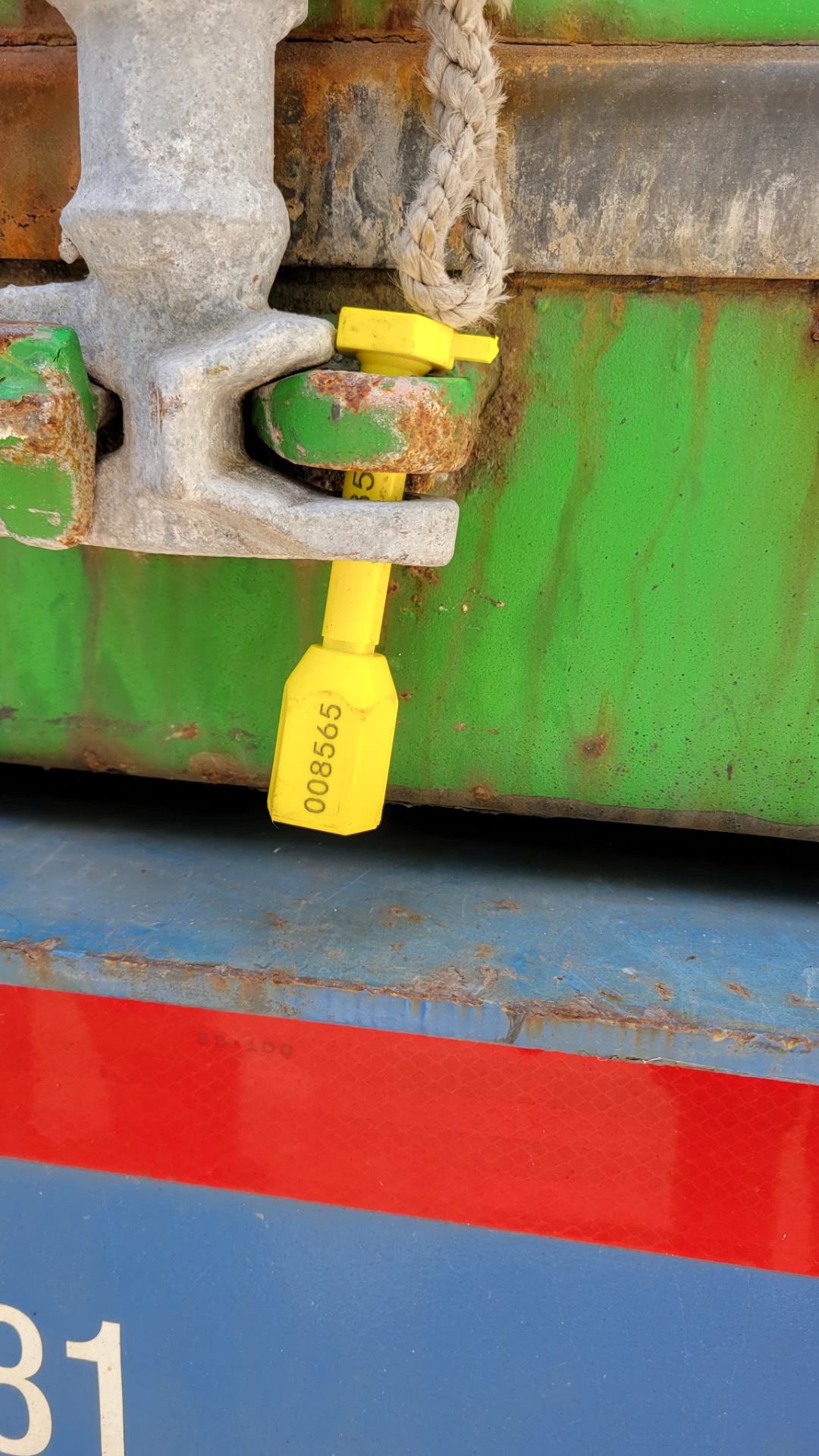
Every load sealed, numbered and photographed
MoveQuoteLocal partners fit a numbered bolt seal at loading, photograph the closed load, and record the seal on your bill of lading or CMR. If the seal is broken anywhere in transit, customs is alerted and you are notified.
Documentation you'll need
Container shipping requires more paperwork than any other move type because every port and every customs authority verifies the load independently. Your mover prepares most of it, but the source documents come from you.
- Full valued inventory — one line per box or item, with an estimated replacement value in destination currency
- Passport bio page + visa or residence permit for the destination country
- Proof of destination address (rental contract, deeds, letter from employer)
- Bill of lading — issued by the shipping line and released to you on payment
- Packing declaration and fumigation certificate (Australia / NZ / US require ISPM-15 wood treatment)
- For USA: ISF (Importer Security Filing, aka 10+2) filed 24 hours before vessel loads
- For Australia: B534 Unaccompanied Personal Effects Statement
- For Canada: B4/B4A Personal Effects Accounting Document
Customs implications
Every non-EU destination treats an inbound container as a customs event. In most cases, personal used household effects belonging to a returning national or a newly-arrived permanent resident are duty-free and VAT-free provided the goods have been owned for 6–12 months and the paperwork is filed correctly.
The relief programme differs by country: Transfer of Residence (ToR) in the EU, Section 321 / HHG entry in the US, Unaccompanied Personal Effects in Australia and NZ, B4 exemption in Canada, and Residence Visa duty-free entry in the UAE. Missing the deadline (usually 3–12 months from your arrival) means paying full import VAT / GST on the goods' declared value — often 5–25%.
Insurance — what to buy
Standard goods-in-transit liability is capped at low per-kilo amounts (typically £40/kg or lower) and covers only proven negligence. It's not insurance in the sense most people mean.
For a real container move you want Marine Cargo All-Risks insurance underwritten against the Institute Cargo Clauses (A). This covers total-loss events (vessel sinking, container overboard, warehouse fire) and partial-loss / damage events at the level you declare, with a small deductible. Typical premium is 1.5–3% of declared value; on a £30,000 declared inventory that's £450–£900. Worth every penny.
- Institute Cargo Clauses (A) — all-risks marine transit
- Full replacement value basis, not depreciated value
- Includes packing, port handling and destination delivery legs
- Confirm pairs & sets clause for high-value items (art, watches)
Frequently asked questions
+Should I choose FCL or LCL?
Under 15 m³, LCL almost always wins on price. 15–25 m³, do the maths both ways — sometimes a 20ft FCL is only £300–£500 more and saves 2 weeks. Over 25 m³, FCL is usually cheaper and always faster.
+How is my container secured?
A numbered high-security bolt seal is fitted at loading, photographed, and its number recorded on the bill of lading. If the seal is broken anywhere in transit, customs is alerted and the box is inspected — your mover attends the inspection on your behalf.
+Can I put a car in the same container?
Yes — a car occupies roughly 15 m³ inside a 40ft container. You'll need a separate vehicle export declaration (V5C, chassis photos, DVLA notification) and destination re-registration within 6 months in most countries.
+What happens if the vessel is delayed?
Weather, congestion and mechanical issues can add 3–10 days. Your bill of lading is unaffected — the goods are still yours and still insured. Delivery just slides.
+Are containers weatherproof?
Steel containers with intact seals are watertight in normal sea conditions. Extreme weather events (Category 4+ cyclones) do occasionally cause partial water ingress; marine insurance covers this.
+Can I inspect the container before it's sealed?
Yes — for FCL to your door you're present the entire time. For LCL you can attend the warehouse consolidation by prior arrangement, though most customers rely on the mover's inventory sign-off.
Ready to move? Get vetted international quotes.
Answer a few questions and MoveQuoteLocal international partners will quote your container shipping move — dedicated, shared, customs included.